
“What is AI?”
“How does it work?”
“How can I use it in my work?”
“Will it take my job?”
I can’t think of a hotter topic in Instructional Design right now than AI. Here are a few ways that I have leveraged it in my work.
Scoping
I love scoping! When I discover a new topic I need to build a course for I love to spend a few hours googling the topic to build a base of understanding. I am not competing with the SME to know more, I just like to have a basic comprehension of the topic before I meet with the SME so I can speak their language, even if a little.
So how has AI helped me? I had a course request for block chain. Before the request, I thought it was either something you put on prisoners’ legs so they don’t run escape or something to do with cybercurrencies. So I went to Google Bard and did a search. Here are the results:

Not bad! This is a good basic level understanding. But how does it work? Here is the follow up question.

This is very clear and a good place to start.
Let’s compare it to the Wiki results.
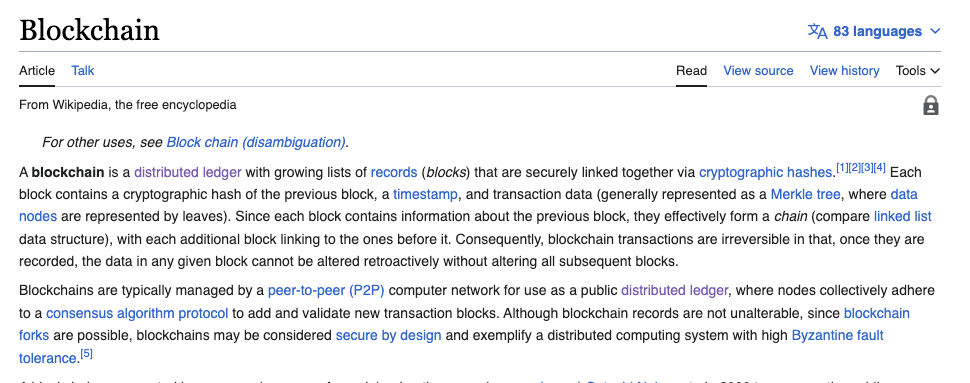
These would be good for a deeper dive into the rabbit hole of block chains. But do I need to know the biography of W. Scott Stornetta to talk with the SME about the topic?
Course Design
Sometimes we have a course we built years ago that haunts us. 10 years ago, I was assigned the task of creating an eLearning on the 5 why’s. Although I could make it engaging, include best practices and practices to avoid, I could not create situations and scenarios for the eLearning because I had never applied it in the field.
The other day I revisited the topic with Google Bard. I asked Bard to write me a 5 why’s course for engineers. Seconds later I had the outline for a course, as well as 2 other versions. I patched the best parts of those 3 scripts together and had a pretty good course. You can see for yourself here.

Movie Scripts
We had to create an engaging course for the Sustainability team. The instructional designer assigned to the project had the vision of a series of 12 movies introducing each topic. She wanted the movies to be like the game of telephone – where each chapter began with a movie of 2 characters discussing one of the sustainability topics, and then a character continuing to the next to discuss with another person, and so on.
Since she was not an expert on the topic, she had Chat GTP create the first draft of the scripts from public information on the internet. In a couple of days she had created the 12 scenario scripts with images to guide the visual designer. Of course, she had to edit for clarity. And the SME had to look them over for accuracy. But it gave her a good foundation to start with and saved her many hours.
I just tried the experiment in Google Bard and came up with some pretty good results. Here is an unedited script:

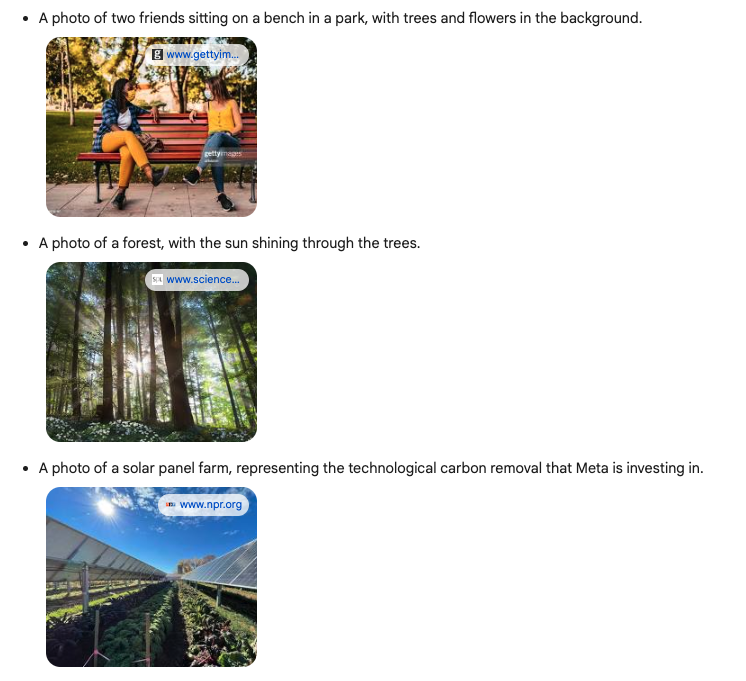
And here are a few image suggestions to accompany the script.
Not So Great…
As for designing illustrations, I have experimented with DALL E and Canva, but was disappointed with the results. They were a bit amateur, awkward, or distracting. Certainly not as good as working with a visual designer or downloading a set of icons or images. But I will try again in a few months.
As for AI video instructors, those weird talking heads are interesting. But the robo instructor seems more distracting than beneficial right now. I understand one of the best practices for engagement is to have the instructor visible to the learners. However, the awkward movements and speech irregularities prove distracting compared to a video of an actual person.
Sometimes a Jarvis
Another drawback I have discovered with Google Bard is that it interferes with Google search on my phone. I like to use my phone to peruse news and articles, and the interface gets in the way of my scrolling. Also, I can accidentally tap it and it pops up with an overview of the article I am reading, which I don’t want.

It makes me feel like Tony Stark welding with the AI assistant robot Jarvis. Jarvis is trying to be helpful, but it is actually getting in Tony’s way.
Timeliness
With the fast development and integration of AI right now, I expect this post will quickly become outdated! I look forward to learning your thoughts on the topic.
 Stan Shifferd ID+
Leave a comment